
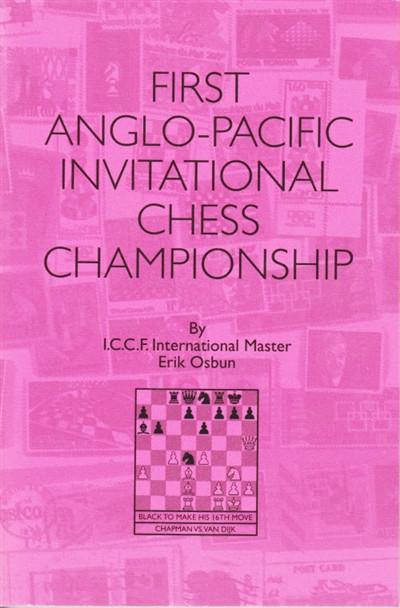
 |
| First Anglo-Pacific Invitational Chess Championship - Osbun |
Dive into the fascinating world of postal chess with a detailed review of the "First Anglo-Pacific Invitational Chess Championship - Osbun". This book meticulously documents the thrilling games from the inaugural tournament, offering insights and analysis for chess enthusiasts of all levels. Explore the strategic nuances, tactical complexities, and the unique character of correspondence chess through the lens of this remarkable event.
Table of Contents
- Introduction
- Tournament Overview
- Osbun's Analysis and Game Quality
- Significance for Postal Chess Literature
- Book Specifications
- Frequently Asked Questions
Introduction
The "First Anglo-Pacific Invitational Chess Championship - Osbun" book captures the essence of a significant postal chess tournament. Edited and annotated by IM Osbun, this book provides a deep dive into the strategies and complexities of correspondence chess. It showcases the games played by a diverse group of talented individuals from North America and the Pacific region.
Tournament Overview
The tournament witnessed a surprising outcome with Roger Chapman of Australia securing first place, surpassing seasoned players like Claude Pare (Canada), Max Salm (Australia), Chris Van Dyke (USA), and David Eisen (USA), along with twelve other accomplished postal chess players. The field included three ICCF International Masters (Muir, Tennant, and Salm) and three players (Glaser, Keast, and Henri) with Olympic team experience. Despite the presence of established figures like Salm, a veteran of three World Championships, Chapman and Pare emerged as the top contenders. Discover more about chess openings and strategy – learn more here! Looking for incredible deals on chess sets? Check out these amazing offers on Temu.
Find this book on eBay.com or eBay.co.uk.
Osbun's Analysis and Game Quality
One of the book's greatest strengths lies in Osbun's exceptionally fine annotations. The games are filled with twists, turns, and excitement, all meticulously explained by IM Osbun. His insightful commentary sheds light on the players' thought processes, revealing the subtle nuances that often determine the outcome of a postal chess game. This book pairs perfectly with expanding your knowledge through a great chess course! Check out this course to improve your game!.
Get cash back on your chess book purchase with Letyshop! Start saving today!
You can purchase the book here.
Significance for Postal Chess Literature
Despite the abundance of high-quality postal chess games played globally, the literature dedicated to correspondence chess remains relatively scarce. This book helps fill that void. "First Anglo-Pacific Invitational Chess Championship - Osbun" is a welcome addition to postal chess documentation. Looking for affordable chess clocks? Don't miss these great deals on Temu.
Further Reading on Postal Chess
For those interested in diving deeper into the world of postal chess, this book serves as an excellent starting point. If you enjoyed this, consider purchasing another great resource on strategy by clicking here! Another amazing Temu chess deal is available - check it out!
Book Specifications
- 187 Pages
- Paperback
- Publisher: Caissa
- Published: 2003
- Notation: Figurine Notation
Chess Championship Insights: Your Questions Answered
What makes this book a valuable resource for postal chess players?
This book stands out due to its detailed annotations by IM Osbun, offering a rare glimpse into the strategic depths of high-level postal chess games. Unlike many resources that focus on over-the-board play, this book delves specifically into the unique characteristics of correspondence chess, where players have extended time to analyze positions and calculate variations. The inclusion of games from a diverse group of international players further enriches the content, providing a broad range of tactical and strategic approaches. Whether you're a seasoned postal chess player or just starting out, Osbun's analysis and the inherent complexities of the games offer invaluable learning opportunities.
Who was Roger Chapman, and what contributed to his victory in the tournament?
Roger Chapman, representing Australia, emerged as the surprise winner of the First Anglo-Pacific Invitational Chess Championship. While not as widely known as some of his competitors, who included International Masters and Olympic team veterans, Chapman demonstrated exceptional skill and strategic acumen throughout the tournament. His victory can be attributed to a combination of factors, including thorough preparation, calculated risk-taking, and a deep understanding of postal chess principles. The book delves into his key games, highlighting the specific moves and strategies that led to his success, offering valuable insights into his playing style and approach to the game. By studying Chapman's games, readers can gain a better understanding of the critical elements that contribute to success in postal chess.
How does postal chess differ from over-the-board chess, and why is this book relevant to understanding those differences?
Postal chess, or correspondence chess, differs significantly from over-the-board chess in several key aspects. The most notable difference is the extended time allowed for each move, which enables players to engage in deeper analysis and calculation. Postal chess also eliminates the pressure of time constraints and allows for the use of external resources, such as chess engines and databases. This book is particularly relevant because it focuses specifically on postal chess games, showcasing the unique strategies and tactics that are effective in this format. Osbun's annotations highlight the subtleties of positional understanding and long-term planning that are crucial in correspondence chess, providing readers with a comprehensive understanding of the game's nuances. Furthermore, the absence of face-to-face interaction adds a psychological dimension, making the book an insightful resource for understanding the distinct challenges and rewards of postal chess.
What is figurine notation, and why is it used in this book?
Figurine notation is a symbolic system used to represent chess moves without relying on language-specific abbreviations. Instead of using letters like "N" for knight or "R" for rook, figurine notation uses small symbols or icons to represent each piece. For example, a knight move might be represented by a small knight icon followed by the destination square. This notation has the advantage of being universally understandable, regardless of the reader's native language. The use of figurine notation in "First Anglo-Pacific Invitational Chess Championship - Osbun" makes the book accessible to a wider international audience, ensuring that the games and analysis can be enjoyed by chess enthusiasts from around the world. This contributes to the book's value as a resource for postal chess players, regardless of their linguistic background.
Where can I find other resources to improve my postal chess game?
Besides "First Anglo-Pacific Invitational Chess Championship - Osbun," numerous resources can help you enhance your postal chess skills. Online chess platforms like Lichess and Chess.com offer correspondence chess options, allowing you to practice and compete against other players. Many chess books and articles delve into specific strategies and tactics relevant to postal chess, focusing on areas such as positional understanding, endgame technique, and long-term planning. Additionally, chess forums and communities dedicated to postal chess provide opportunities to discuss games, share ideas, and learn from experienced players. Explore different resources to build a comprehensive understanding of this chess variant.
Hopefully, this comprehensive review has sparked your interest in exploring the fascinating world of postal chess. Feel free to share your thoughts and experiences in the comments below. Happy chess adventures!


0 Comentarios